.:[Double Click To][Close]:.
Showing posts with label Japanese Tattoos. Show all posts

Sunday, May 22, 2011

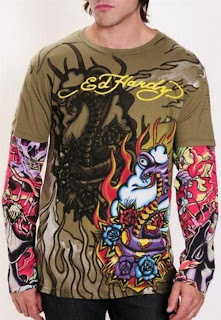
Cool Japanese Shirt Sleeve Tattoo Design

Cool Japanese Shirt Sleeve Tattoo DesignFor men, it is important to have a tattoo that is unique, different, at the same time cool. More popular designs include dragons, flames and skulls for sleeve tattoo designs. If you want something a little more different, don't go to these generic and common tattoo subjects! Why won't you get yourself a Japanese sleeve tattoo instead?

Cool Japanese Shirt Sleeve Tattoo DesignHere are some popular subjects of Japanese shirt sleeve tattoo designs:

Koi fish - Koi fish are beautiful and vibrant. They look great for sleeve tattoo designs! The contrasting vibrant oranges and deep blue water hues are perfect. Make your Koi fish tattoo three dimensional and with color... this way, it will really feel like the fish is about to pop out from your skin!

Cool Japanese Shirt Sleeve Tattoo DesignDragons - Japanese dragons sometimes look more fierce and vicious than their European counterparts. You can have a fierce dragon tattooed black or red in your sleeve. Dragons are mystical, magical, and the perfect symbol of strength and power.

Samurai warriors - Samurais are exclusive to the Japanese culture. Samurais are very popular in Japanese tattoo art and traditional art. They symbolize courage, strength and honor too. You can have a samurai tattooed on your sleeve, in honor of the beautiful Japanese culture.

Tuesday, May 17, 2011

Japanese Koi Fish Sleeve Tattoos Designs

Japanese Koi Fish Sleeve Tattoos Designs
Japanese Koi Fish Sleeve Tattoos DesignsNot only one of the very beautiful and sexy tattoo designs, Koi Fish Tattoo is also full of deep, rich and meaningful history. If you don't know, Koi is a Japanese word for Wild Carp which is a fresh water fish which is famously treasured by the Japanese who maintain their love and respect for the fish for thousands of years.

There was a Japanese legend about Koi fish that if a Koi successfully climb the fall on the Yellow River at the Dragon Gate, it will transform into a dragon. For that reason, the Koi symbolizes the strength, courage, determination to overcome obstacles and ability to obtain higher goals in life. Other say it means good fortune or luck.

There are many different opinions, though, to the symbol of the Koi Fish Tattoo. Some people feel that there is a sexual symbolism to the color and the direction of the Koi swim. There are also sources that said Koi is a symbolism of family where a black Koi represent the father; orange/red is mother; blue/white is for boys; and red/pink is for girls. For me it's a great choice of tattoo for both men and women because not only it gives a perfect shape on the arm, koi fish tattoos are popular for the deep history and symbolism behind them.

The Japanese Koi Fish Tattoo Design

The Japanese Koi Fish Tattoo DesignIf you are looking for some of the most popular tattoo designs on the "net", the Japanese Koi fish tattoo is included with a number of the other top choices. This tattoo design is associated to the Zen and stands for Good Luck. The Japanese depict an equivalent linking to the Koi fish and a Samurai Warrior because they both characterize bravery, the capability to reach high levels of achievement and the ability to pick yourself up from life's problems. Rather than running off and having a Japanese Koi fish tattoo you should remember several factors as well as the tattoo color and its place on your body.

As you ultimately go to the tattoo shop for your Koi fish concept you must maintain an unmistakable outlook on the color pattern you would like the tattoo to be in. A highly trendy color plot is the infamous Yen Yang tattoo of black and white. For several individuals this long time display is a way too boring and tame display and they would like to go for a different, more exciting display.

It's probably a good idea to pick a color design with the intention of adding to your body complexion. As a example, if you have a lighter complexion it may be even more smarter to get a gold or yellow design. Different shades that could succeed depending on your flesh tone are white, orange, purple and red and you could learn that one of these could be the paramount color choice for your Japanese Koi fish tattoo design.

Hot Japanese Koi Fish Tattoos Designs

Hot Japanese Koi Fish Tattoos DesignsKoi fish tattoos are quickly growing in popularity. In fact many traditional Japanese tattoo designs are coming to life with new vivid tattoo ink colors. This is a rapidly growing movement very similar to the west coast tattoo style. The west coast tattoo style started with the idea of taking older classic tattoo themes like anchors, hearts and etc and adding a ton of bright, and beautiful inks to them. A few years back the west coast tattoo style was about the hottest thing in tattoos.

Hot Japanese Koi Fish Tattoos DesignsHowever many people are not satisfied to stick with what everyone else has already done and most people that get tattoos want them to be unique and different. Therefore tattoo artists are always on the look out for new designs, new ideas and new ways to take their art to the next level. This constant pushing of the envelope develops many hot new trends in tattoo design.

In the past 5 or so years there has been a rebirth or revitalization of traditional Japanese tattoos. One of the hottest themes in Japanese tattoos has been koi fish tattoos.

Monday, May 16, 2011

Japanese Sleeve Tattoo Designs

Japanese Sleeve Tattoo DesignsJapanese sleeve tattoos with its rich and intricate details combined with bright colors are extremely popular among tat enthusiasts. It's becoming a mainstream and are not only getting attention from the males but with females as well. Being very exquisite and decorative, tattooing this theme can take a lot of time, even multiple session thus it can be expensive. However, the idea of sporting an aesthetically pleasing tattoo art on your arm can be really rewarding making it so much worth in the end.

When contemplating on getting Japanese sleeve tattoos, you have two options to choose from - half sleeve or full sleeve designs. Half sleeve tattoos start from the upper arm and end near the elbows while full sleeve covers the entire arm. Normally, a full sleeve is a product of something that started out as just a half-sleeve body art and then is extended later on with complimentary designs to make it a full sleeve ink. The arm is the body part involved in this process and it is such a great canvas to work on because its shape makes way for artistic flow of various tattoo arts.

Japanese Sleeve Tattoo Designs

Japanese Koi Fish Tattoo Designs

Japanese Koi Fish Tattoo DesignsWhen it comes to favorites with tattoos the Japanese Koi fish tattoo design is a leader. both in beauty and popularity. This design represents Zen and symbolizes 'Good Luck'. The Japanese draw a parallel between the Koi fish and a Samurai Warrior as they both represent courage, the ability to attain high goals and to overcome life's difficulties. Before rushing off and getting a Japanese Koi fish tattoo you need to consider many factors including the tattoo color, its location on your body and of course any complimentary inclusions.

Japanese Koi Fish Tattoo Designs

Sunday, January 2, 2011

Japanese Tattoos - A Brief History

The traditional Japanese tattoos known as 'horimono' became very popular among the people of the 18th century or the Edo period. The most popular choices for the designs of the tattoos were the images from traditional water color paintings, picture books and woodcuts. Understanding the history and background is as important to experience and enjoy the Japanese horimono tattoos as it is to preserve their traditions.

The Edo period was like a period of Cultural Revolution for the Japanese. There were many changes that happened during that period at different levels of the society. A different class of people grew up out of the ordinary people of Japan, who found lot of interests in fashion, comedy, drama, novels, songs, and theatre. So, a unique and separate culture began to grow up.
As the society of Edo progressed, the ordinary people began to take pride in activities of fashion. Gradually, the Edo working class people began to imitate the heroes from the folk stories they used to read in the books (especially the picture books) and comics and other artworks as popularized by the famous woodblock artist Kuniyoshi. Getting highly impressed from these artistic works, the people began to tattoo themselves ritualistically and painfully with the designs based on folklore, such as dragons, Chinese lions, and giant snakes, and also with religious figures with the help of sharp needles for inserting pressed charcoal ink under their skin.

The people who carried out the process of tattooing were mostly the woodblock artists who simply had to exchange their wood-carving blades for long and sharp needles. With time, some of these people became so much involved with tattooing that common people began to accept them as tattoo specialists. This is how the unique Japanese traditional body art form, horimono was formed.
Today, it is very common to have tattoo conventions in Japan as well as in the West. But to have such conventions in the Edo period in Japan around 150 years earlier is itself a strong indicator of the Japanese having a long and rich history of tattoo culture.

Even though there are no photographic record of their works and designs, lot of books are available today which describe the life and work of many tattoo artists of the Japanese Edo period.

One very famous tattooist from the Edo period is Horiuno. Horiuno was born in 1843. He became a tattooist at the age of 20. But before beginning to work full time from his age of 40, he travelled extensively throughout Japan, going from place to place like Osaka, Kyoto and Shizuoka. However, he continued doing his business well into his seventies and much of his work can be seen even today. Most of his customers used to work in the local construction and manufacturing industries, and in 1912, some of these people of the Kanda area formed the Kanda Choyu-kai, meaning "Tattoo Friends Society of Kanda", and after another 10 years, the society was extended to outside the Kanda area, and formed the Edo Choyu-kai.
All the members of this group, who are mostly labourers such as construction workers, carpenters and plasterers, meet every year at places like Ojinanushi-no-taki and Marukotamagawaen, take part in mass outdoor banquets, or in festivals such as the Asakusa Sanja-matsuri, and present their intricate and extensive body art tattoos with pride.

Horiuno was known as the most talented tattooist from Japan and was famous throughout Japan and also overseas. However, at that time there were many other equally skilful tattooists in Japan, such as Horikane, Kyuta, Horiiwa, and Nekokichi.

If you have grown tired of your tattoo and want to have it removed there are a number of options available, home and DIY methods have worked for people but the highest success rate comes with surgical methods. To remove a tattoo with excision can be costly but it's far less painful with a greater success rate. Take a look at the effect of tattoo excision.